THE SMALL FILM COLLECTION
A little perspective.
A little motion.
Five ideas to sit with. Each takes less than a minute, works on silent, and leaves you with something small to try.
01 / A SMALL FILM
Make the future concrete
Picture an ordinary day, then work backward to one detail you can try. A small introduction to imagining the process as well as the outcome.
Try the ordinary-day canvas Read the related guide ↗Read the film
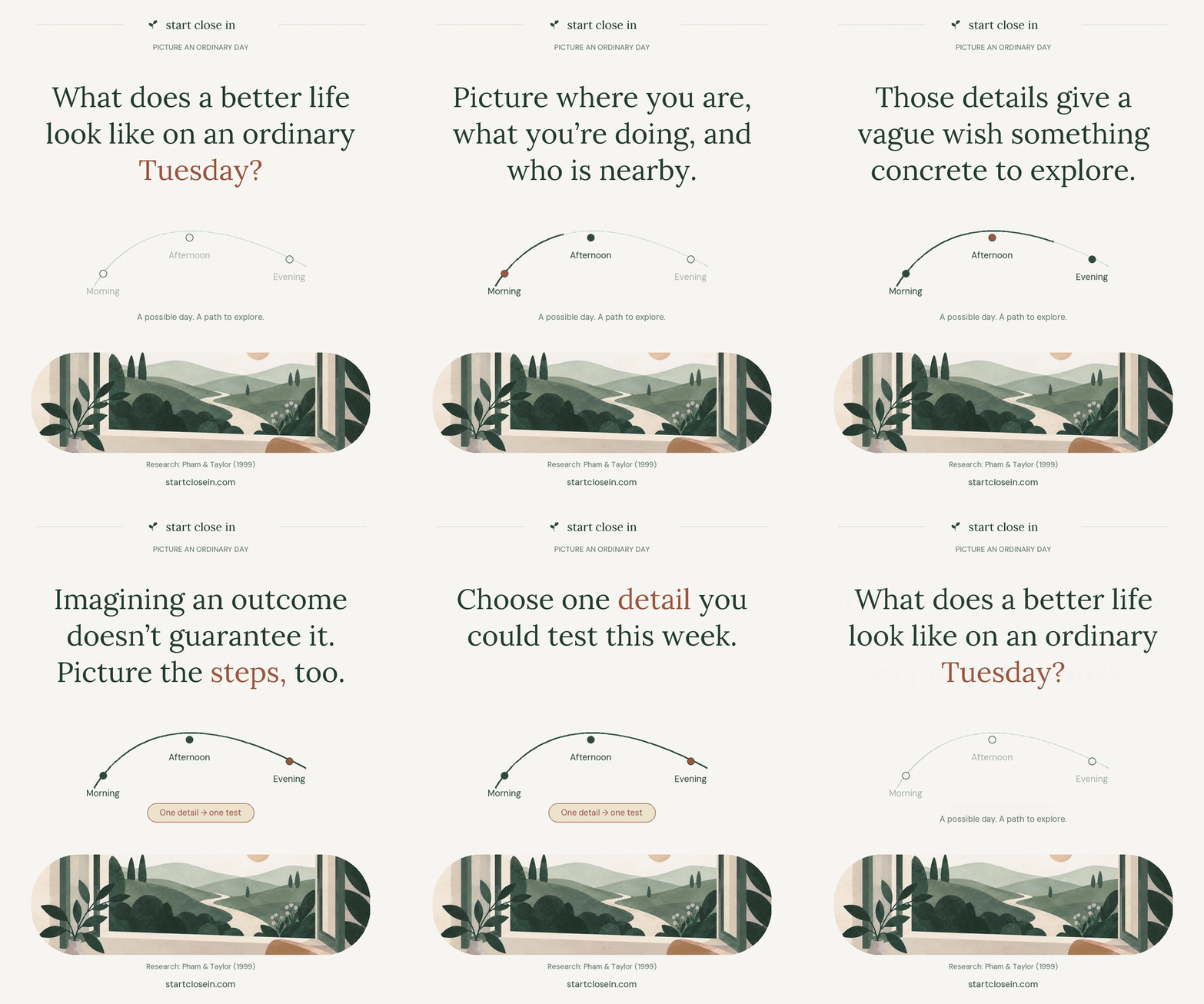
What does a better life look like on an ordinary Tuesday?
Picture where you are, what you’re doing, and who is nearby.
Those details give a vague wish something concrete to explore.
In one student study, imagining the study process improved planning and exam performance.
Imagining an outcome doesn’t guarantee it. Picture the steps, too.
Choose one detail you could test this week.
Bring a piece of that day closer. Try the ordinary-day canvas.
Sources & context
- From Thought to Action: Effects of Process-Versus Outcome-Based Mental Simulations on Performance ↗
Lien B. Pham and Shelley E. Taylor · 1999
A specific exam context; no evidence here that an imagined life inevitably happens.
Original text and illustrations by Start Close In. The people and organizations cited are not affiliated with this product.
02 / A SMALL FILM
Meaning beyond the career diagram
Meaning can grow in friendship, caring, making, and work. Explore the Japanese idea beyond the familiar career diagram.
Explore work that fitsRead the film
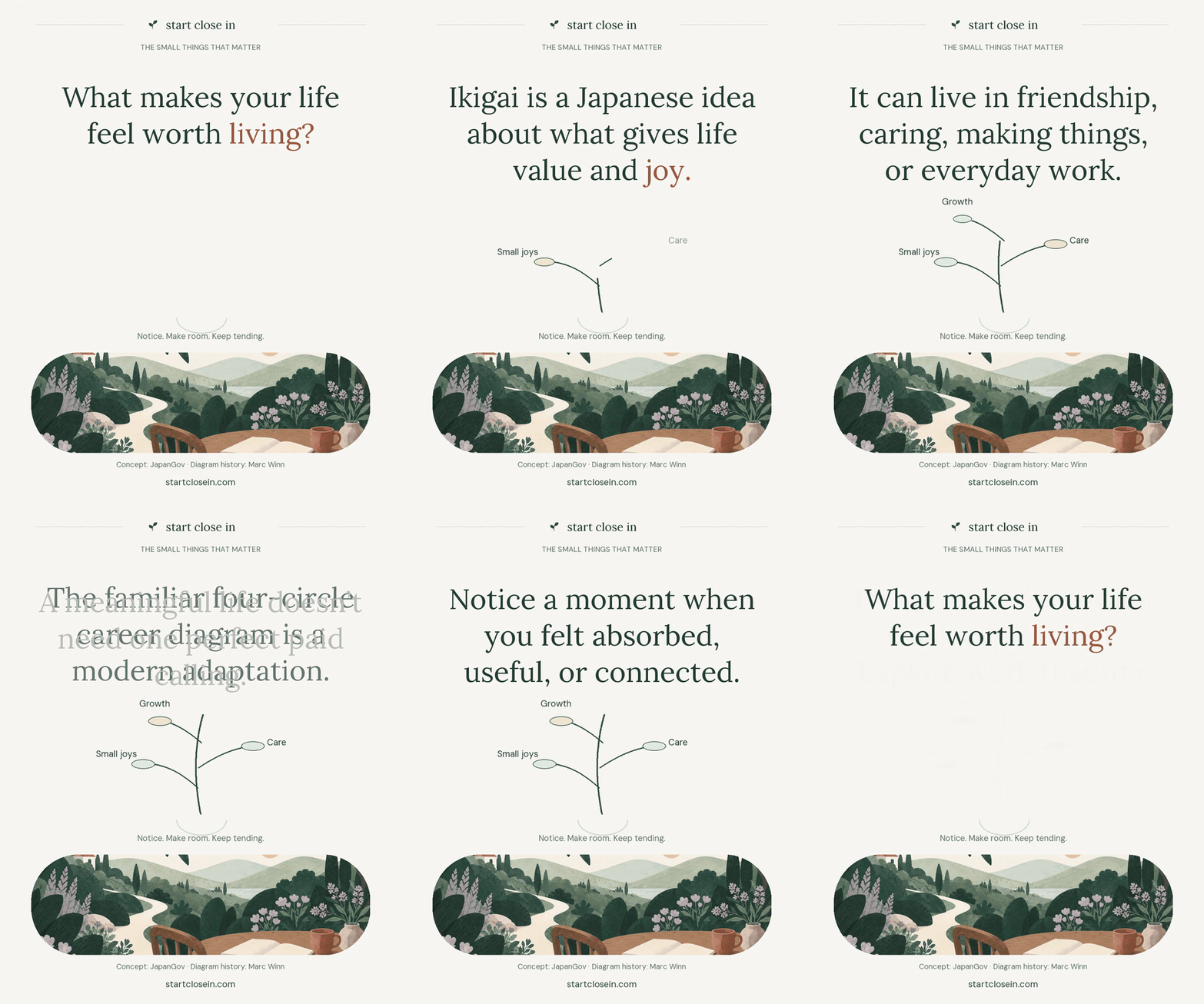
What makes your life feel worth living?
Ikigai is a Japanese idea about what gives life value and joy.
It can live in friendship, caring, making things, or everyday work.
The familiar four-circle career diagram is a modern adaptation.
A meaningful life doesn’t need one perfect paid calling.
Notice a moment when you felt absorbed, useful, or connected.
Follow that clue with a small experiment. Explore work that fits.
Sources & context
- Ikigai: The Japanese Secret to a Joyful Life ↗
Government of Japan, Kizuna · 2022
Used for cultural explanation, not causal health or longevity claims.
- Ikigai: the story behind the diagram ↗
Marc Winn
Do not present one paid calling or four overlapping circles as the necessary definition of ikigai.
Original text and illustrations by Start Close In. The people and organizations cited are not affiliated with this product.
03 / A SMALL FILM
Two questions for a difficult choice
Jeff Bezos’s future perspective and Tim Ferriss’s fear-setting ask different questions. Bring both back to a choice that belongs to you.
Build your next-step plan Read the related guide ↗Read the film
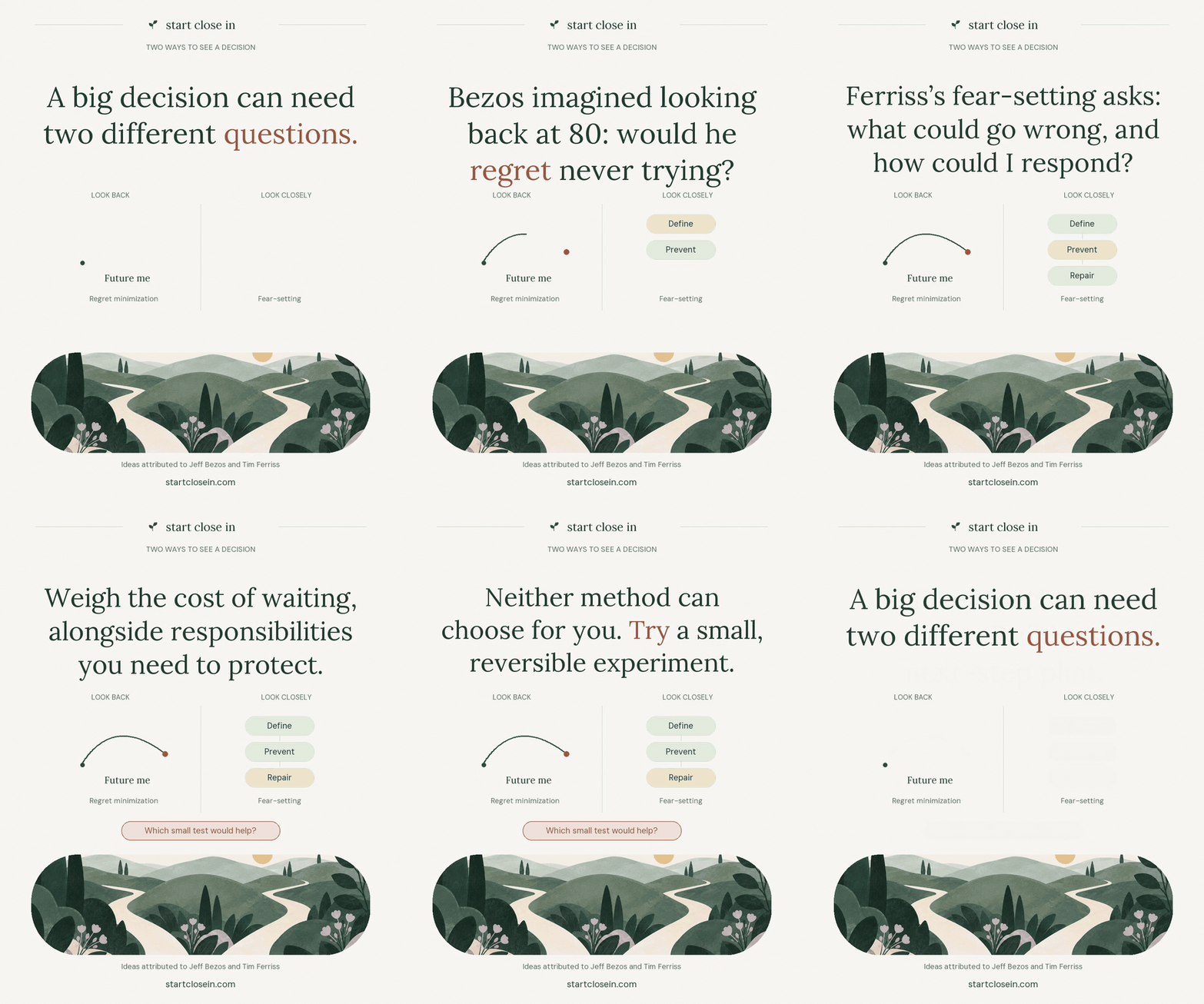
A big decision can need two different questions.
Bezos imagined looking back at 80: would he regret never trying?
Ferriss’s fear-setting asks: what could go wrong, and how could I respond?
Name the risk. Reduce what you can. Plan a repair.
Weigh the cost of waiting, alongside responsibilities you need to protect.
Neither method can choose for you. Try a small, reversible experiment.
Make the choice smaller. Build your next-step plan.
Sources & context
- 2010 Baccalaureate remarks ↗
Jeff Bezos, hosted by Princeton University · 2010
Personal account, not a controlled test or universally appropriate risk rule.
- Statement by Jeff Bezos to the U.S. House Committee on the Judiciary ↗
Jeff Bezos, published by Amazon · 2020
Use for attribution, not an endorsement of this product or a guarantee of successful decisions.
- Fear-Setting: The Most Valuable Exercise I Do Every Month ↗
Tim Ferriss · 2017
This film describes the method; it does not claim clinical effectiveness or that serious risks are easy to repair.
- Fear-setting TED exercise slides ↗
Tim Ferriss · 2017
Do not imply all consequences are reversible; preserve responsibilities and constraints.
Original text and illustrations by Start Close In. The people and organizations cited are not affiliated with this product.
04 / A SMALL FILM
A page for a possible future
A writing practice studied for optimism and positive feelings, with room for what the evidence can—and cannot—tell us.
Try the ordinary-day canvas Read the related guide ↗Read the film
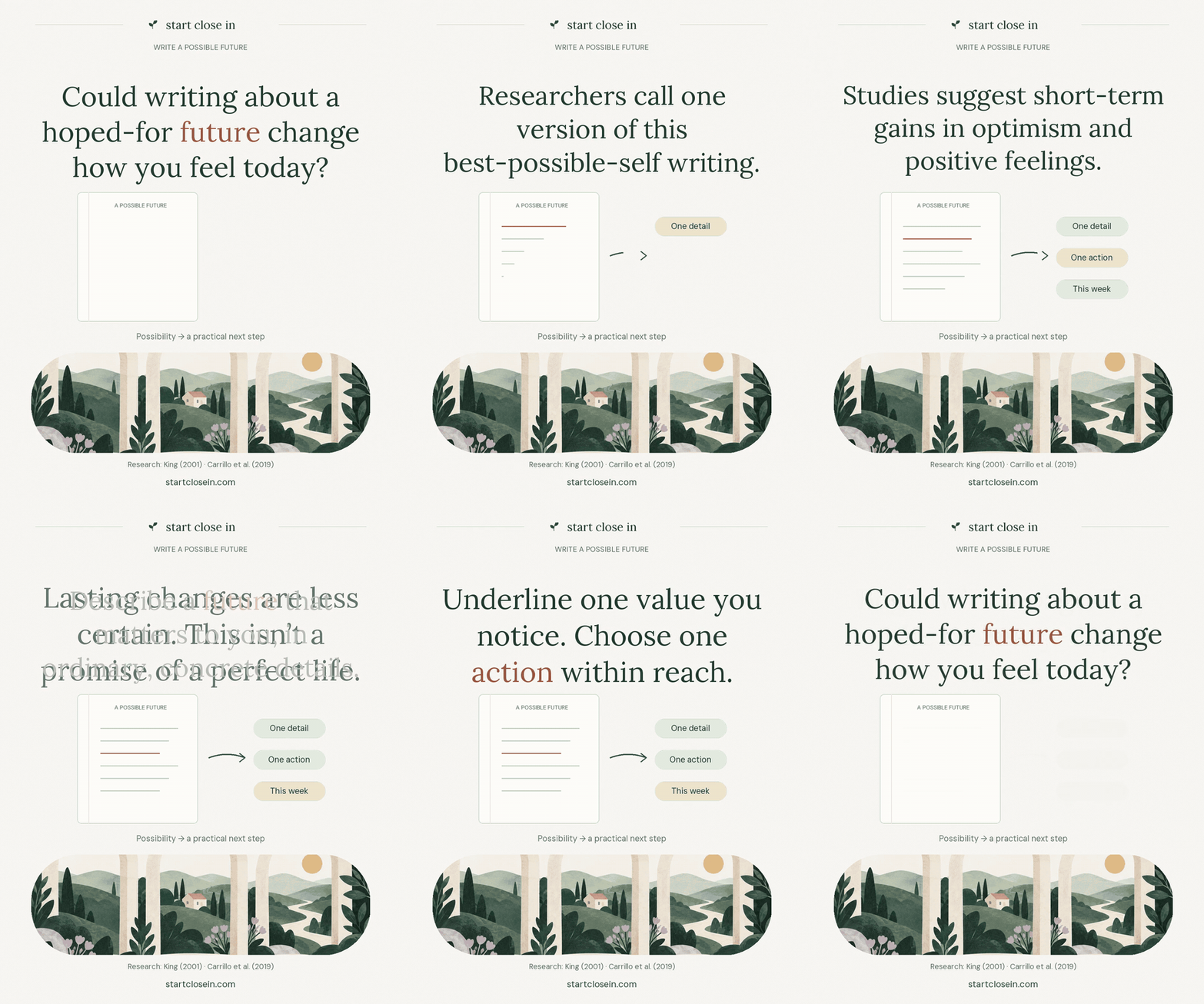
Could writing about a hoped-for future change how you feel today?
Researchers call one version of this best-possible-self writing.
Studies suggest short-term gains in optimism and positive feelings.
Lasting changes are less certain. This isn’t a promise of a perfect life.
Describe a future that matters to you, in ordinary, concrete details.
Underline one value you notice. Choose one action within reach.
Begin with a page. Try the ordinary-day canvas.
Sources & context
- The Health Benefits of Writing About Life Goals ↗
Laura A. King · 2001
Our brief canvas is an original adaptation, not this exact dose or an evaluated substitute for treatment. No health claim is used.
- Effects of the Best Possible Self intervention: A systematic review and meta-analysis ↗
Alba Carrillo and colleagues · 2019
Long-term evidence was limited; only three studies measured outcomes beyond three months. Outcomes and study quality varied. This does not establish life-goal achievement.
Original text and illustrations by Start Close In. The people and organizations cited are not affiliated with this product.
05 / A SMALL FILM
Begin with a question that is yours
An original reflection on David Whyte’s poem: make room for the nearby question that a grand plan can obscure.
Read poems for perspectiveRead the film
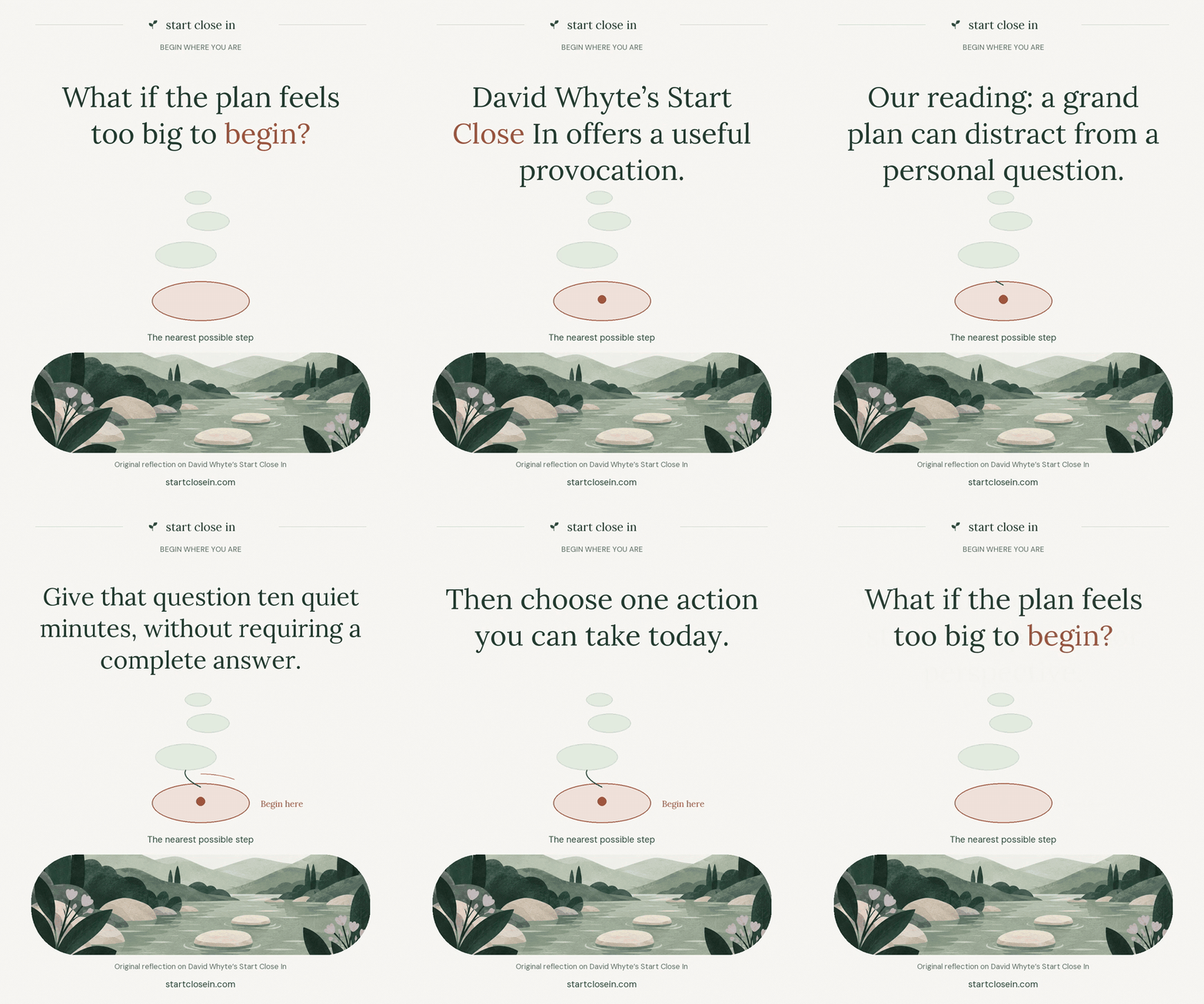
What if the plan feels too big to begin?
David Whyte’s Start Close In offers a useful provocation.
Our reading: a grand plan can distract from a personal question.
Which conversation or choice have you been postponing?
Give that question ten quiet minutes, without requiring a complete answer.
Then choose one action you can take today.
Write one honest next step. Read poems for perspective.
Sources & context
- Start Close In ↗
David Whyte · 2026
No poem lines, recording, author photograph or facsimile may be reproduced in these films. Commentary is our interpretation, not endorsement or affiliation.
Original text and illustrations by Start Close In. The people and organizations cited are not affiliated with this product.
Which question is keeping you company?
Bring it into a reflection. You don’t need a polished starting point.